How Robotic Exoskeletons Are Helping People Walk Again
For someone who has lost the ability to walk, taking a few steps again can mean a lot. Robotic exoskeletons are helping some people with paralysis or weak legs stand and walk during rehab. These wearable machines support the legs and help move them through walking steps. They don’t cure spinal cord injuries, but they give some people a chance to practice walking with support.
What are robotic exoskeletons?
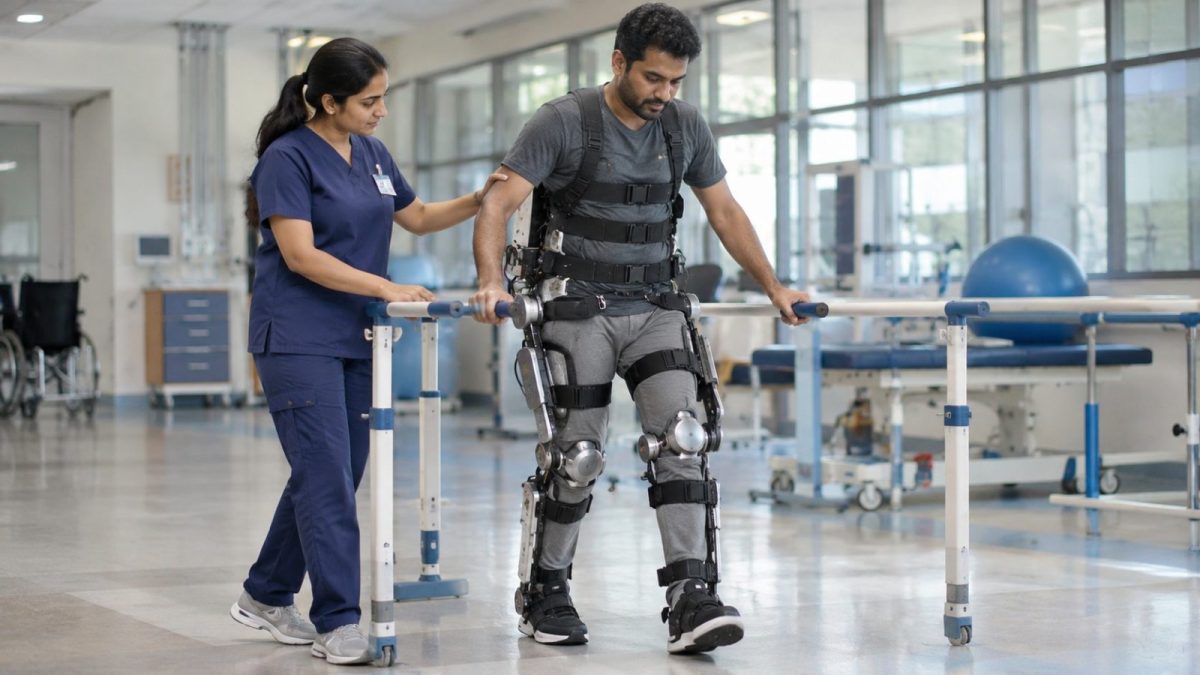
A robotic exoskeleton is a frame that you wear on the outside of your body. It fits around the waist, legs and feet. Small motors at the hips and knees help move the legs. A battery powers the whole thing, while sensors and software control each step.
The person usually uses crutches or a walker to stay balanced, and a trained therapist stays close by to help. Some devices are made for hospitals and rehab centers, while others are designed for selected users to practice walking outside hospitals.
How do these machines help people walk?
First, a medical team checks if a person is right for the device. Then the exoskeleton is fitted to their body. Depending on the model, the user might shift their weight, press a button or make a small movement to start walking. The motors help move one leg forward, and then the other.
This lets people practice walking even when they can’t move their legs properly by themselves. The therapist adjusts the machine and guides the session. The main goal is to help users practice standing, balancing and taking steps safely.
What does the research show?
Researchers are studying how these machines can help people with spinal cord injuries. A 2025 review looked at 13 studies with 247 people. It reported better results in walking tests and leg movement after exoskeleton training. But the results were different across some studies, so more research is still needed.
Another review looked at 11 clinical trials with 552 participants. It also found improvements in walking ability and daily activities. These results are encouraging, but they don’t mean everyone who uses an exoskeleton will be able to walk on their own.
Who can use them, and what are the limits?
Not everyone can use a robotic exoskeleton. Doctors and therapists first check a person’s injury, strength, joint movement and overall health. Some devices also need users to have enough upper-body strength to hold crutches.
Safety matters a lot too. Users can have falls, skin irritation or pain if the machine doesn’t fit right. Blood pressure can also change during training. That’s why many devices need medical supervision and proper training.
The machines can also be expensive. Their size, weight and battery life might make regular use hard for some people.
What could happen next?
Researchers are trying to make exoskeletons lighter, more comfortable and easier to control. They’re also studying which patients benefit the most and how long training should go on. Making these machines cheaper will be important if more hospitals are going to use them.
Robotic exoskeletons aren’t a replacement for wheelchairs or regular physiotherapy. But they give people with mobility problems another option. For someone who hasn’t been able to stand for years, taking a few supported steps can mean a lot.