RBI’s New Single Rulebook for Payment Company Cybersecurity
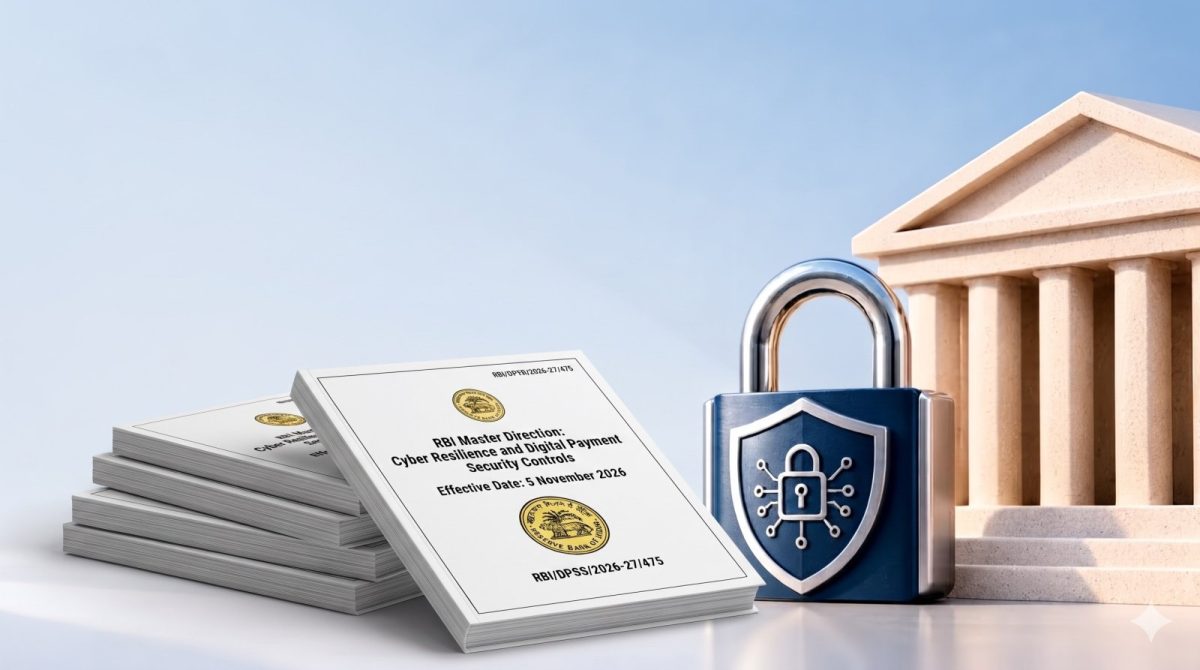
The Reserve Bank of India (RBI) has put its cybersecurity rules for non-bank payment companies into one document, issued on 5 November 2026. These rules cover firms that run payment systems without being banks. Think of a school rulebook that used to be spread across many notices and is now one booklet. Companies can check a single place to see what they must do.
What RBI issued
The notification is numbered RBI/DPSS/2026-27/475, and it is a Master Direction. That means one rulebook on one subject. RBI’s covering letter says it joined its July 2024 cyber directions with the 2019 rules for third-party ATM switch providers and the 2020 instructions on system audits. Large and medium operators must follow it from the day RBI put it online. Small operators have until 1 April 2028.
How the rules work for payment apps
Under the Governance Controls section, a company’s board has to watch over cyber risk. It can give the main job to a committee that meets at least once every quarter. Unusual incidents, like cyber-attacks or delays in settlement, must reach RBI within six hours of being found. Cyber incidents must also go to the Indian Computer Emergency Response Team (CERT-In).
The mobile payments section covers device binding, which ties an app to one phone and SIM, like a key cut for one lock. If a user changes their registered mobile number or email, online payments must pause for at least 12 hours.
RBI’s wider push against fraud
MediaNama’s 9 November explainer says RBI also sent banks a confidential advisory dated 3 November about APIs. These are the links apps use to share data. MediaNama connects it to more AI-assisted attacks, and says CERT-In named a threat actor, CRAFTY FALCON, that tested money flows with Rs 1 transfers. The report also says RBI is looking at a customer kill switch that would block debit transactions instantly, but it isn’t final. MediaNama credits the Free Press Journal for that detail.
What happens next
RBI’s covering letter says the goal is to stay strong against current and new cyber risks, and that operators should try to use the latest security standards. Neither RBI nor MediaNama predicts what this will do to fraud losses, jobs or user safety. There is no market size or business forecast either, so those parts are still unknown. The one future date is 1 April 2028, when small operators must start following the rules.
My thoughts
This part is my own thinking, not RBI’s. Six-hour reporting could be hard for small firms with small security teams. The Directions reach unregulated partners, like vendors, only when both sides agree, so contracts will matter. None of the sources I opened measures how much fraud these rules will stop. For Indian fintech startups and students, it shows that audits and incident response are becoming everyday skills.
For now, the clearest change is that things are simpler. There is one rulebook with one set of deadlines and clear jobs for boards. Whether payments get safer depends on how well companies follow it and how closely RBI checks their yearly audits.