What Is Happening?
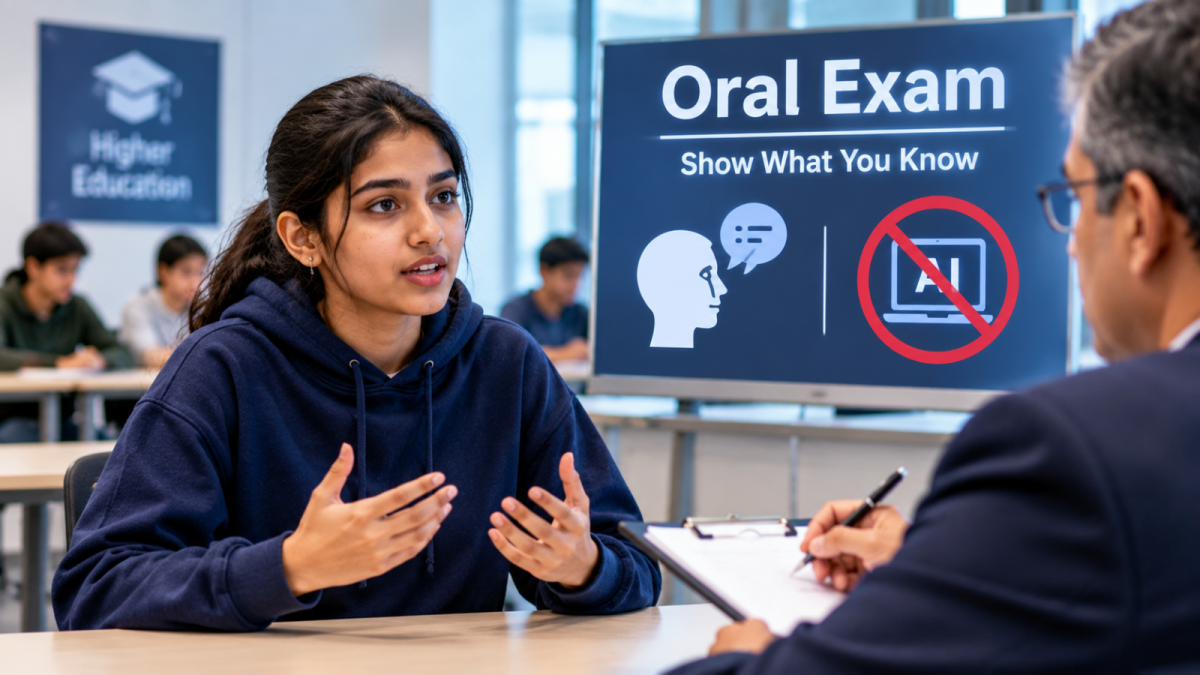
To stop widespread artificial intelligence cheating, colleges across the United States are bringing back an old testing method: the oral exam. Big schools, including Cornell University, the University of Pennsylvania, and UC San Diego, are moving away from unsupervised homework papers. In Cornell engineering classes, students must take twenty-minute spoken tests with no laptops or notes allowed. At the same time, business teachers at New York University are testing voice AI tools to run quick spoken interviews before real professors check the saved transcripts.
How Does It Work?
Standard AI checkers fail because of how modern language models work. These computer programs write by guessing the next best word using huge sets of training data. Software scanners try to spot machine text by checking if words feel too predictable or if sentence lengths stay too even. Because new AI tools copy human writing rhythms so easily, text scanners no longer work well. Oral exams replace guesswork with live face-to-face checks. During the voice AI tests at NYU, the school ran live speech-to-text tools and grading software for about forty-two cents per student, showing that spoken checks can work without costing too much money.
Why Is It Important?
This change matters because text scanners often make mistakes and wrongly accuse honest students whose natural writing happens to look too neat. Oral tests skip broken checking software completely. When a student has to look a teacher in the eye—or answer surprise follow-up questions on the spot—real honesty returns to the classroom. It keeps grading fair and proves that final marks show true human learning instead of clever computer prompts.
What Are the Challenges?
The biggest hurdle is balancing teacher time against computer delays. Talking to seventy students one by one takes more than twenty-three extra hours of work for every exam. In huge introductory computer science classes with over a thousand students, live human testing would take four times the normal teaching staff just to check grades. While voice AI helpers fix this time crunch, early school tests hit a few snags. The voice bots sometimes asked too many questions at once, and students felt weird talking to a blank screen during awkward pauses. Spoken tests can also cause heavy stress for shy students or learners speaking a second language, so schools must set up fair rules to help them.
What Happens Next?
Colleges will soon mix take-home papers with short five-to-ten-minute spoken checks or recorded video walk-throughs. As voice AI tools get better at natural conversation and fast replies, live spoken testing will become a normal way to prove what students actually know in the AI age.


