What Is Happening?
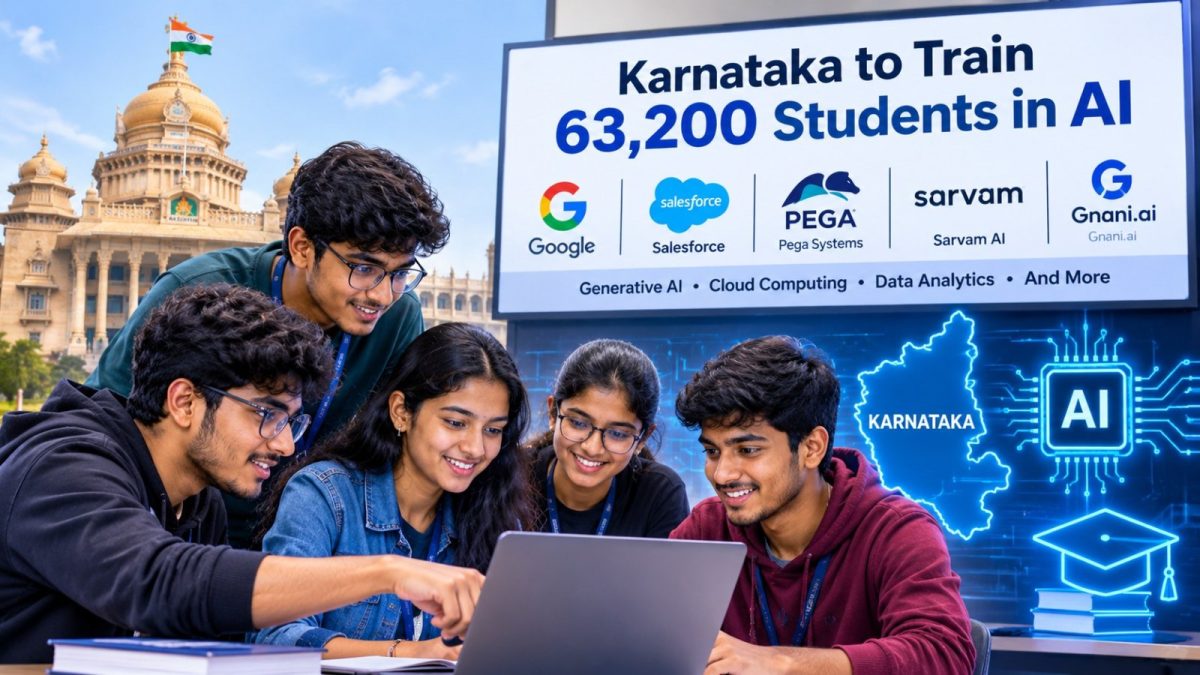
On November 17, 2026, the Karnataka government signed deals with five major tech companies at the 29th Bengaluru Tech Summit. The partners include global giants Google, Salesforce, and Pega Systems alongside Indian AI startups Sarvam AI and Gnani.ai. Together, they plan to train 63,200 engineering and diploma students as well as working professionals across the state. State IT Minister Priyank Kharge said the goal is to help young people build real tools instead of just using existing apps. Gnani.ai also signed a separate deal to train 1,000 engineering and science students specifically in voice tools.
How Does It Work?
Instead of relying on boring textbook lectures, the program focuses on hands-on coding exercises, real industry tools, final group projects, and official certificates. Each company brings its own special strength to the classroom. Global leaders like Google and Salesforce will teach students cloud computing, data study, and large business software tools. Pega Systems focuses on automated office tasks, while Indian firms Sarvam AI and Gnani.ai build local-language models and voice assistants. Learners will study generative AI, which creates text and images, alongside agentic AI—smart software helpers that can finish multi-step tasks on their own.
Why Is It Important?
This plan matters because college classes often fall behind fast-moving tech companies. By mixing global cloud platforms with Indian voice AI innovators, Karnataka is giving local students direct practice with real business software. Teaching young engineers how to build local-language voice helpers is very useful in India, where millions of people speak regional languages instead of English. It turns students from everyday app users into active builders who can solve local problems in healthcare, farming, and small shops.
What Are the Challenges?
Even with big names on board, several key details are still missing. Official reports list 63,200 learners as a target rather than a finished result, and the deals leave open major practical questions. Right now, students do not know how long each course will last, whether the classes are completely free, or how seats will be split among the five firms. Without clear rules on who gets picked first, rural diploma students could find it hard to compete with peers in Bengaluru.
What Happens Next?
Engineering and diploma students across Karnataka should watch official notices from the state IT department and the five partner firms for sign-up links. Once enrollment rules and course dates go live, this state-backed effort could become a model for how Indian colleges teach practical AI skills across the country.


