Beam Says Its Sickle Cell Treatment Hit Its Goal, But It’s Early
A US company called Beam Therapeutics says a one-time sickle cell treatment might be getting closer. On 10 November, Beam said its therapy, risto-cel, met the main goal of its BEACON trial. It plans to ask the FDA for approval as early as the end of 2026. It says this would be the first base-editing therapy to go up for approval. You can read the company’s announcement here.
What goes wrong in sickle cell disease
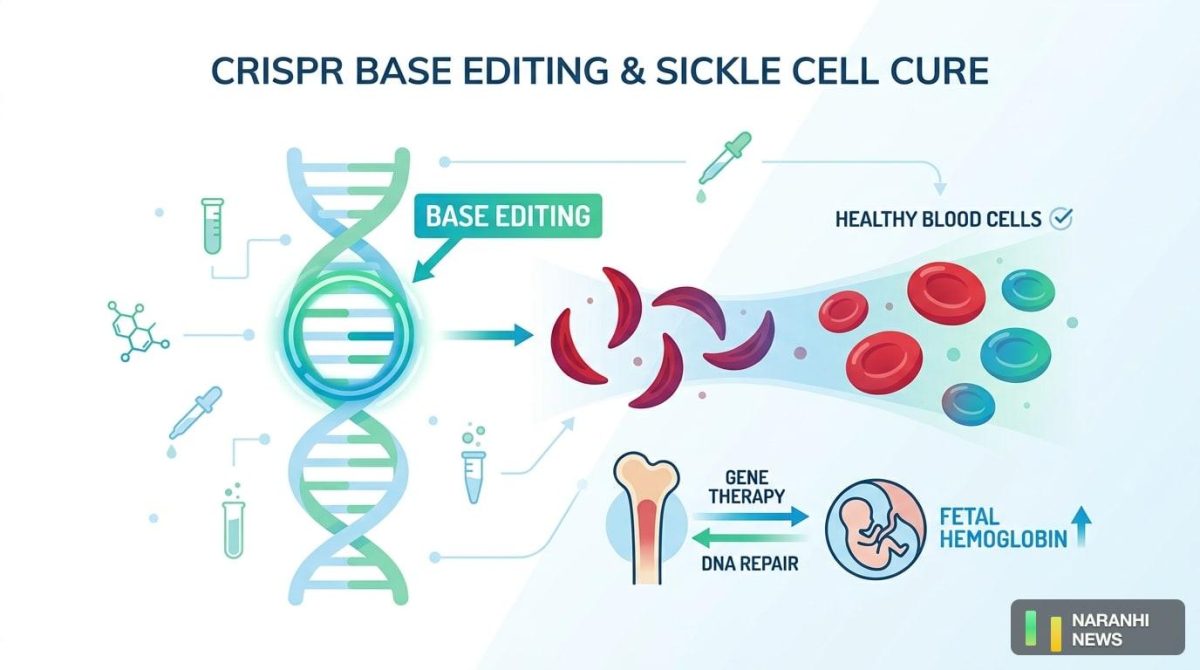
It all starts with one tiny mistake in a gene. That gene makes haemoglobin, the protein in red blood cells that carries oxygen. Because of the mistake, red cells bend into a sickle shape. They get stuck in blood vessels and cause sudden, really bad pain.
How the treatment works
You’ve probably heard of CRISPR, which cuts DNA. Base editing is gentler. It changes one DNA letter without cutting both strands.
Risto-cel doesn’t actually fix the mistake. First, doctors take blood stem cells from the patient. Then in a lab, Beam edits a switch next to two genes called HBG1 and HBG2. The edit stops a protein called BCL11A from turning off fetal haemoglobin. That’s the kind babies make, and it doesn’t sickle.
Next, the patient gets strong chemo with a drug called busulfan, which makes room in the bone marrow. Then the edited cells go back in, kind of like a stem cell transplant.
What the trial showed
BEACON is an early-stage trial. By 20 October, 49 people had been treated, 39 adults and 10 teenagers. Only 31 had been followed long enough to count toward the main goal, which was no severe pain attacks for 12 months in a row, checked by independent reviewers.
Beam says it met that goal and its safety goals, but it hasn’t shared the actual numbers yet. Full results are coming in 2027.
Back in late 2024, Beam reported that a patient died four months after treatment because of breathing failure. The trial doctor thought it was probably caused by busulfan and not the edited cells, according to Beam’s update. MedCity News covered it too.
What we don’t know
This is a company announcement and not a published paper. Nobody in the trial was in a comparison group. The treatment is hard on the body, and nobody knows how long the benefit lasts. The FDA hasn’t even received the application yet. So it’s too early to call this a cure.
What it means for India
In 2023, India started a mission to end sickle cell disease as a public health problem by 2047. In June, President Murmu said the screening target was reached early, according to Business Standard.
The big question is cost. News reports say gene therapies for sickle cell cost ₹20 to 25 crore per patient overseas. India has its own therapy, BIRSA-101, which launched in November 2025 and is still being tested. A think-tank report says it could cost about ₹50 lakh. I couldn’t find anything about whether risto-cel will come to India.