Why Old Games Matter
Imagine buying a favorite book and then the ink fades away ten years later. Millions of players face that same problem with classic video games. Game preservation is about keeping old games playable for the future. Without real technical care, decades of digital art and software engineering could disappear forever.
Why Classic Games Disappear: Physical Problems
Old games vanish for physical and digital reasons. Discs suffer from disc rot, which is when the reflective layers break down chemically. Cartridge chips can lose their electrical charge over decades, and old consoles stop working.
Why Classic Games Disappear: Digital Problems
Digital games face even bigger risks. Companies shut down online servers and digital stores all the time. When Nintendo closed the Wii U and 3DS eShops in March 2023, hundreds of digital-only games couldn’t be bought legally anymore. Expired music or brand licenses also make publishers pull older games from modern stores.
How Remasters, Remakes, and Emulation Work: Remasters and Remakes
Developers and archivists use three main methods to save old games. A remaster is like restoring an old painting. Engineers keep the original game engine, update the graphics code, and add higher-resolution textures and audio, while the main gameplay stays the same.
A remake is like rebuilding a house from the original blueprint. Developers write brand new code, make modern 3D models, and redesign the camera controls, but they keep the classic story. For example, Capcom rebuilt Resident Evil 2 in 2019 on its modern RE Engine.
How Remasters, Remakes, and Emulation Work: Emulation
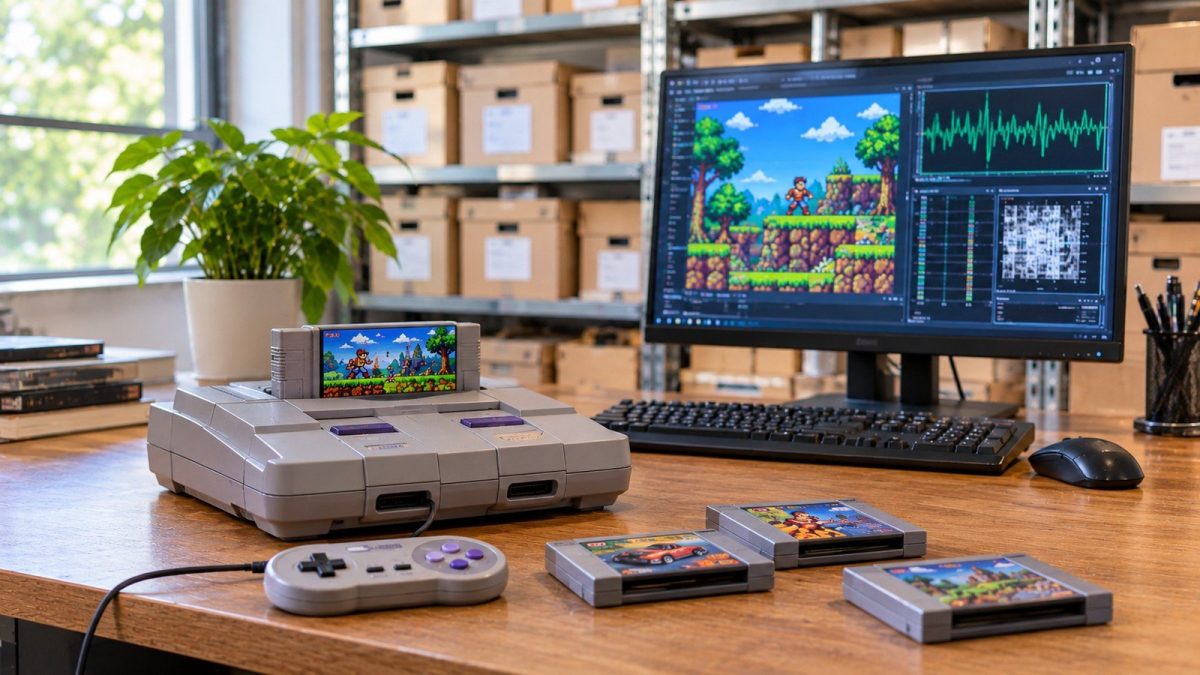
When a studio doesn’t update a game, preservationists use emulation. An emulator is a program that copies the microchip design of an old console. It translates the old machine instructions so modern processors can run the original game files.
Why Preservation Matters
Video games are a big part of modern culture, just like movies and music. A 2023 study by the Video Game History Foundation and the Software Preservation Network found a worrying gap. It said 87 percent of classic video games released in the United States before 2010 are critically endangered and can’t be bought through legal channels. Saving them lets new players experience gaming history. It also lets developers, students, and historians study how software design and storytelling changed over fifty years.
Legal and Technical Problems
Protecting old games is legally complicated and expensive. Copyright laws often stop libraries from sharing digital copies of out-of-print games online. In October 2024, the US Copyright Office denied an exemption that would have let libraries share preserved games remotely for research.
There are technical problems too. Many companies lost the original source code and art files from the 1980s and 1990s. Without them, engineers have to reverse-engineer the compiled game code, which takes a lot of time and money.
The Outlook for Game Archives
Museums, non-profits, and specialized studios are trying to close the gap. The Strong National Museum of Play and the Internet Archive keep physical hardware, source code, and design documents. Studios like Nightdive Studios use their own engines to legally rebuild classic games for modern systems.
Saving gaming history takes teamwork between lawmakers, studios, and archives. With clearer copyright rules and careful digital storage, classic games could stay playable for decades.