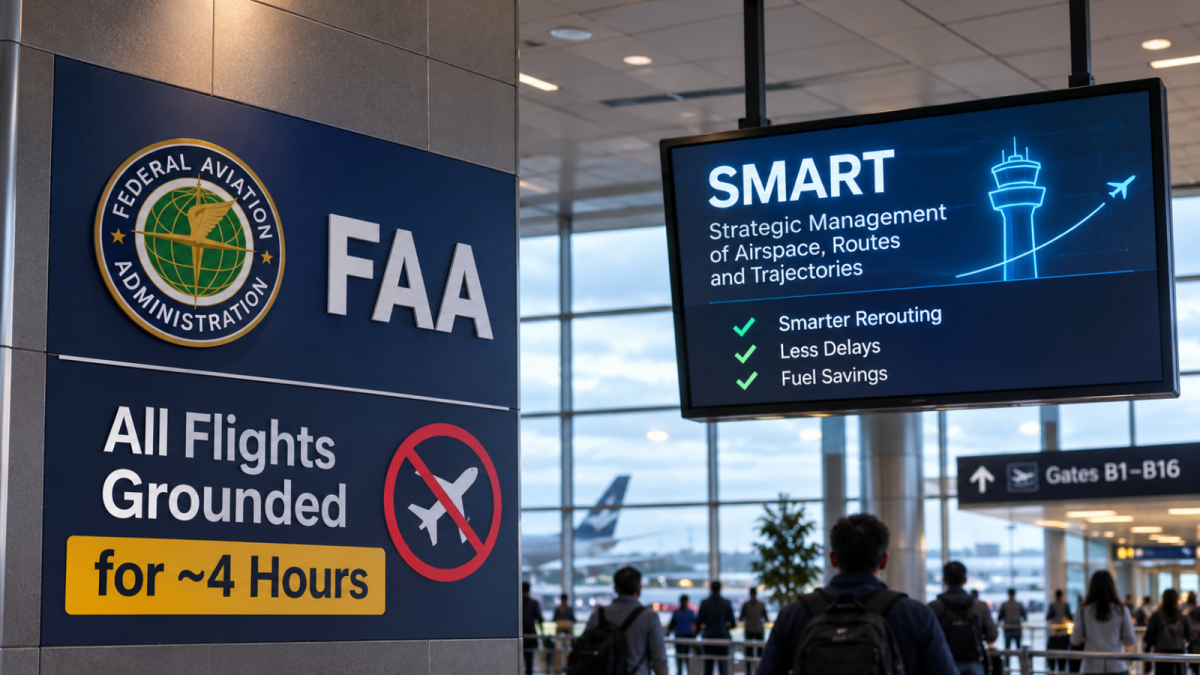
What Happened
On November 13, 2026, the Federal Aviation Administration (FAA) told planes across the US to stay on the ground for about four hours. It’s only the third time in history that all US flights had to stop like this. The cause was a big communications problem at the Air Route Traffic Control Centers. A lot of people paid attention because the FAA had just started using a new AI tool across the country three days earlier.
The New Tool: What SMART Does
The tool is called SMART, which stands for Strategic Management of Airspace, Routes and Trajectories. A Boston company called Air Space Intelligence (ASI) built it under a 12-year, $875 million contract with the government. SMART doesn’t keep planes from crashing into each other, because human air traffic controllers still do that job. It’s more of a planning helper. It looks at tons of data and suggests early reroutes or schedule changes, so flights can avoid bad weather and crowded skies. That saves fuel and cuts delays.
The New Tool: How It Rolled Out
SMART was first tested in September around Washington, D.C. By the time it went nationwide on November 10, it had rerouted 180 flights. It was then expanded to all 22 air route centers.
People Asked About the AI
The communications failure hit on Friday afternoon, and thousands of flights were thrown into chaos. Since it happened so soon after the rollout, people wondered right away if the software was part of the problem. Homeland Security Secretary Markwayne Mullin told reporters there was no sign of an attack. But he said officials hadn’t ruled anything out, including a link to the new AI tool.
ASI quickly said no. It said the ground stop was “not based on or a result of the SMART system, any product of ASI or our integration with FAA and ATC.”
What Officials Blame Instead
Transportation Secretary Sean Duffy pointed to old equipment instead. He said the problem came from aging infrastructure, like overloaded old switches and routers and outdated TDM analog copper lines that couldn’t handle all the data. Newer digital equipment and backup systems mostly held up. The old analog parts were the ones that failed. That shows why the country’s aviation system needs a huge upgrade that could cost billions of dollars.
Correlation vs. Causation
I think this is a good example of mixing up two things that happen close together with one causing the other. The AI tool launched three days before the outage, but that doesn’t mean it caused it. Cybersecurity experts and federal officials say advisory tools like SMART work far upstream from the radio systems, and they’re different from the basic switches that broke. Still, it’s important for officials to be open while the investigation is still going.
What Happens Next
The FAA is working with technical experts to publish full reviews of what happened. This event also tests how safety organizations talk about risk and handle public panic. It also shows how hard it is to add AI to old systems that are already fragile.


