What Happened
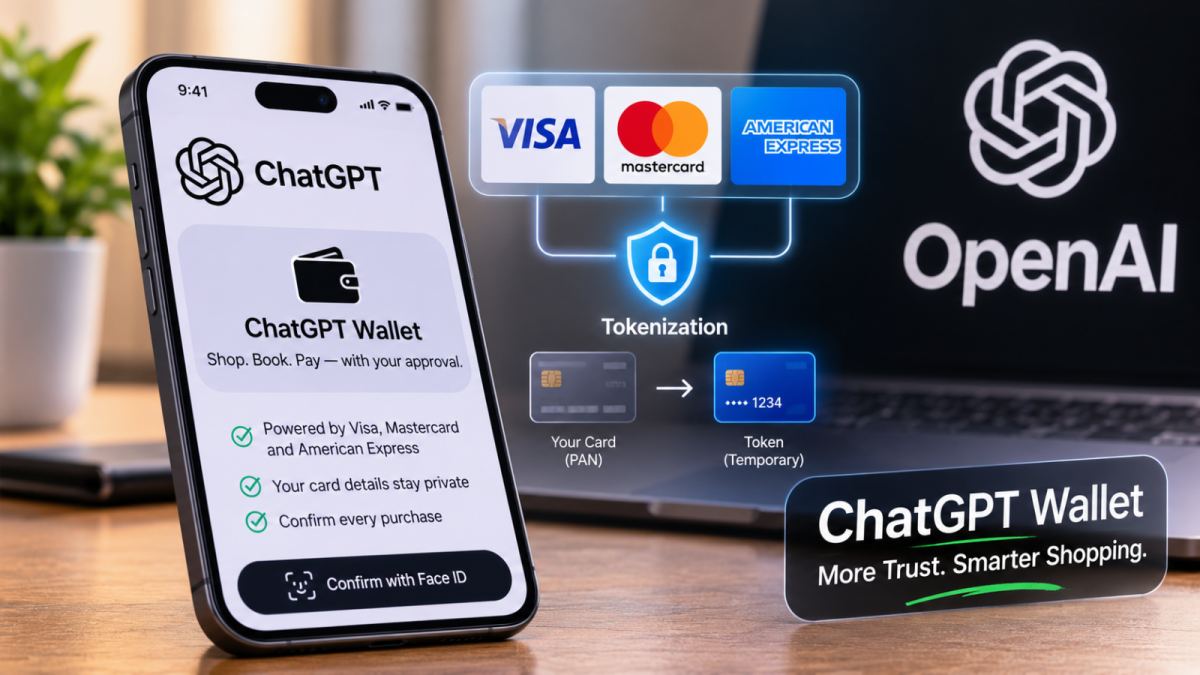
On November 13, 2026, OpenAI introduced ChatGPT Wallet. It was built with Visa, Mastercard, and American Express. With it, OpenAI’s cloud-based agents, called “dots,” can buy products or book services for ChatGPT Pro subscribers in the US. The big idea is that the user’s real financial data doesn’t get shared with the stores. OpenAI is going after one of the biggest problems for AI shopping agents, which is trust.
How It Works: Tokens
The wallet uses something called tokenization. Normally, a store gets your real card number, which is called the primary account number, or PAN. With Wallet, the payment network gives out a token instead. A token is like a fake stand-in card with its own temporary card number, expiry date, and security code. The store never sees your real card, and neither does the AI agent.
How It Works: Your Approval
Right now, every single purchase needs you to confirm it yourself with something like Face ID or Touch ID. Only after that is the token made and the order goes through. So the agent can’t just spend your money on its own.
The Problems That Are Still There: Mistakes and Refunds
Fixing the payment part doesn’t solve everything. What happens if the agent buys the wrong thing, or a fake website tricks it? You still get your card network’s protections and rewards for eligible disputes. But to actually reverse a purchase, you have to deal with the store’s customer service, because you can’t cancel orders in the chat. Also, if you delete a saved card from Wallet, it only stops future agent purchases. It doesn’t cancel orders that are already placed or payments that repeat.
The Problems That Are Still There: Store Cooperation
There’s also a fight between AI companies and online stores. OpenAI published a Commerce Partner Playbook with payment companies like Stripe, Adyen, and Checkout.com. It’s meant to help stores recognize real, approved bot traffic. But stores can still block or decline agent traffic if they want. Right now, many retailers and travel sites already try to keep out scrapers and buying bots.
Why It Matters
Wallet gives the agent proof that you approved a purchase. But it can’t force a store to let the agent in. I think that’s the biggest challenge for AI shopping. The technology can be great, but if stores don’t cooperate, it doesn’t matter much.
What Happens Next
OpenAI has fixed an important part of the trust problem, and the system is safer because real card numbers stay hidden. Still, questions about who’s responsible when things go wrong, and whether stores will welcome AI shoppers, aren’t answered yet. Those will decide if agent shopping becomes normal or stays a small experiment.