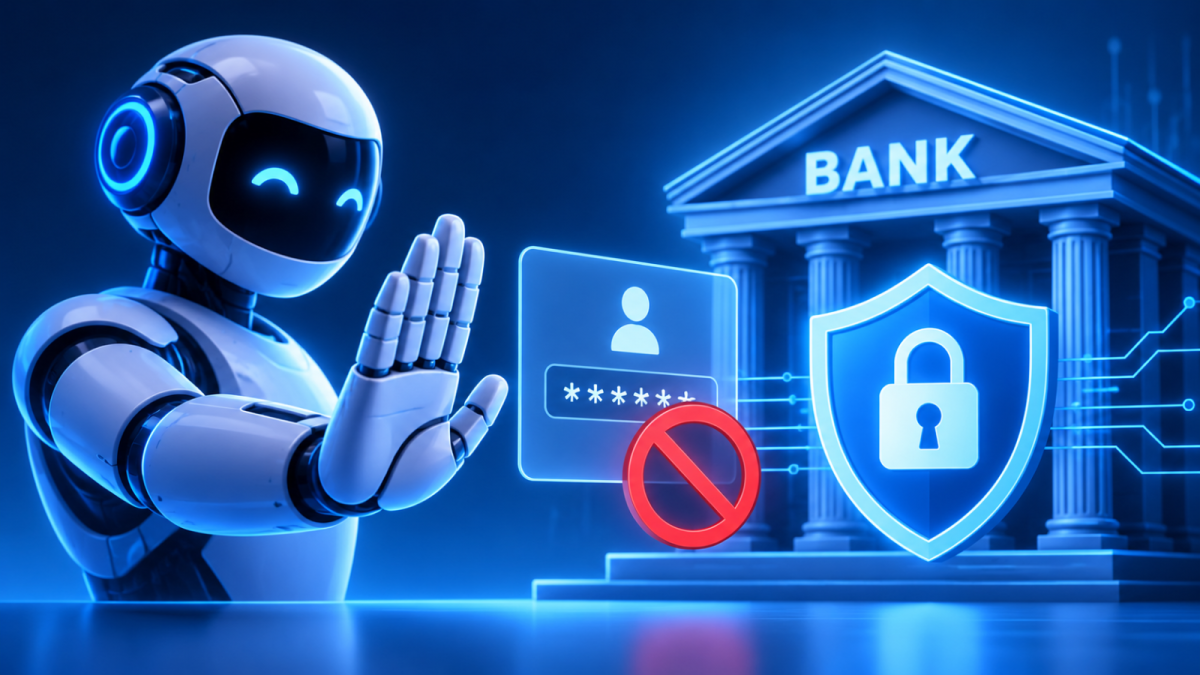
Should You Let an AI Agent Handle Your Money? A Fed Governor Says Be Careful
A top US central banker has warned about something many of us are about to try, which is letting AI agents handle our money. On 16 November, Fed Governor Michael Barr gave a speech in Milan. He said major banks are finding AI agents trying to act inside customer accounts. The banks can’t check three things. They can’t check that the agent is real, that the customer agreed, and that it’s following the customer’s instructions. He didn’t name the banks or say how many cases there were.
How agents get in, and why banks can’t tell
There are two ways. An agent can use your password and work on the bank’s website or app like a person would. Or it can use a permission that was built for software.
The first way is the problem. The bank sees a normal login. Nothing says “this is a program,” and nothing records what you actually approved. It could be your assistant, a scammer’s script, or a tool that misunderstood your request.
The bigger worry: bank runs
Barr said agents could notice a better interest rate or a warning sign and move money instantly. He described this as “accelerating runs that unfold in minutes.” Some reports said “seconds,” but the Fed’s text says minutes.
His fixes are strict authentication, clear consent for specific actions, and technical limits on what agents can do. Banks are already acting. American Banker reported on 27 October that at least five big US banks are blocking AI agents from customer accounts. They are JPMorgan Chase, Citi, Bank of America, Wells Fargo and Morgan Stanley.
Why tokens are safer
A token is a random code that stands in for your real card or account details. It can be limited to one shop, one amount and a short time. It can also be cancelled by itself. A password can’t do any of that. It opens everything.
A simple safety checklist
- Never give an agent your bank username, password or OTP.
- Require your approval for every payment, at least at the start.
- Set spending limits wherever the app offers them.
- Use tokens or limited payment methods, not full access.
- Check your statements and alerts often, and learn how to cancel an agent’s access.
What about India?
Reuters reported in September, citing three unnamed sources, that NPCI, which runs UPI, was preparing a “Unified Agent Protocol.” It would let AI agents make small payments without approval for each one. It would build on two UPI tools that already exist. UPI Circle lets you give another user the power to pay, and Reserve Pay lets you set money aside for repeat payments. Customers would set the rules, with spending limits, audit trails and identity checks. NPCI hadn’t commented when Reuters published.