Can AI Turn Brain Activity Into Pictures?
A camera can record what your eyes see. But what if a computer could make a rough picture just by studying the activity inside your brain? Researchers are looking into this idea using artificial intelligence (AI) and brain scans. Their work shows that AI can turn certain patterns of brain activity into images that look similar to what a person was looking at.
How does this technology work?
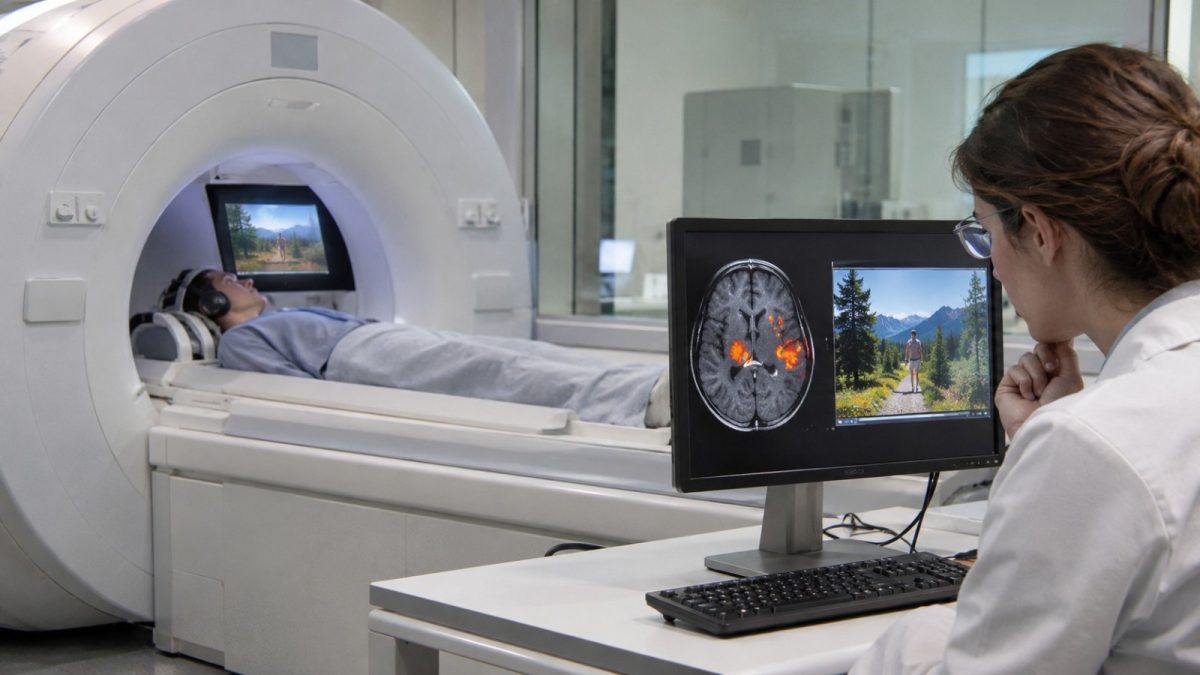
It starts with a brain scanning method called functional magnetic resonance imaging, or fMRI. It measures changes in blood flow inside the brain. These changes help researchers see which parts of the brain become active when a person looks at an image.
In an experiment, a participant lies inside an MRI scanner and looks at different pictures on a screen. The scanner records the patterns of brain activity while the person looks at each image.
Then researchers use AI models to study those patterns. The AI learns how certain brain signals connect to different visual things, like shapes, colors, objects and backgrounds. After it’s trained, the system can take new brain scan data and make a rough version of the image the person might have been looking at.
What have researchers achieved?
Researchers have made some progress in linking brain activity with pictures. In 2023, Yu Takagi and Shinji Nishimoto showed a method that used brain activity and generative AI to rebuild images that participants had viewed.
Other projects have explored this too. Systems like MindEye2 try to do a better job of turning brain signals into visual images. These advances show that AI can find useful patterns in brain activity and use them to make pictures.
But the results aren’t always exact. The rebuilt pictures might get the general subject or scene right without matching every small detail of the original.
Why is this research important?
This research could help scientists understand how the human brain handles what we see. It might also help with future communication tools for people who can’t speak or move easily.
For example, researchers might one day find ways to help patients share their thoughts through brain signals. The technology could also give new ways to study memory, perception and brain-related conditions.
Those are possible future uses, not proven medical solutions. A lot more research is needed before these systems can be used in everyday healthcare.
What are the main challenges?
One big challenge is that brain activity is different for every person. AI models often need lots of training data collected while participants look at many images.
fMRI scanners are also expensive and need controlled lab conditions. The images AI makes can have mistakes or details that weren’t in the original picture.
Privacy is another worry. Brain data is personal information, so researchers have to handle it carefully and make sure participants understand how their data is used.
What could happen next?
Researchers are working on making these systems more accurate and easier to use. Better AI models and improved brain scanning methods could help make clearer images from brain activity.
For now, this technology is mostly a research tool. It can’t read every thought or show exactly what someone is imagining. But it gives scientists a new way to study the link between the human brain and AI.