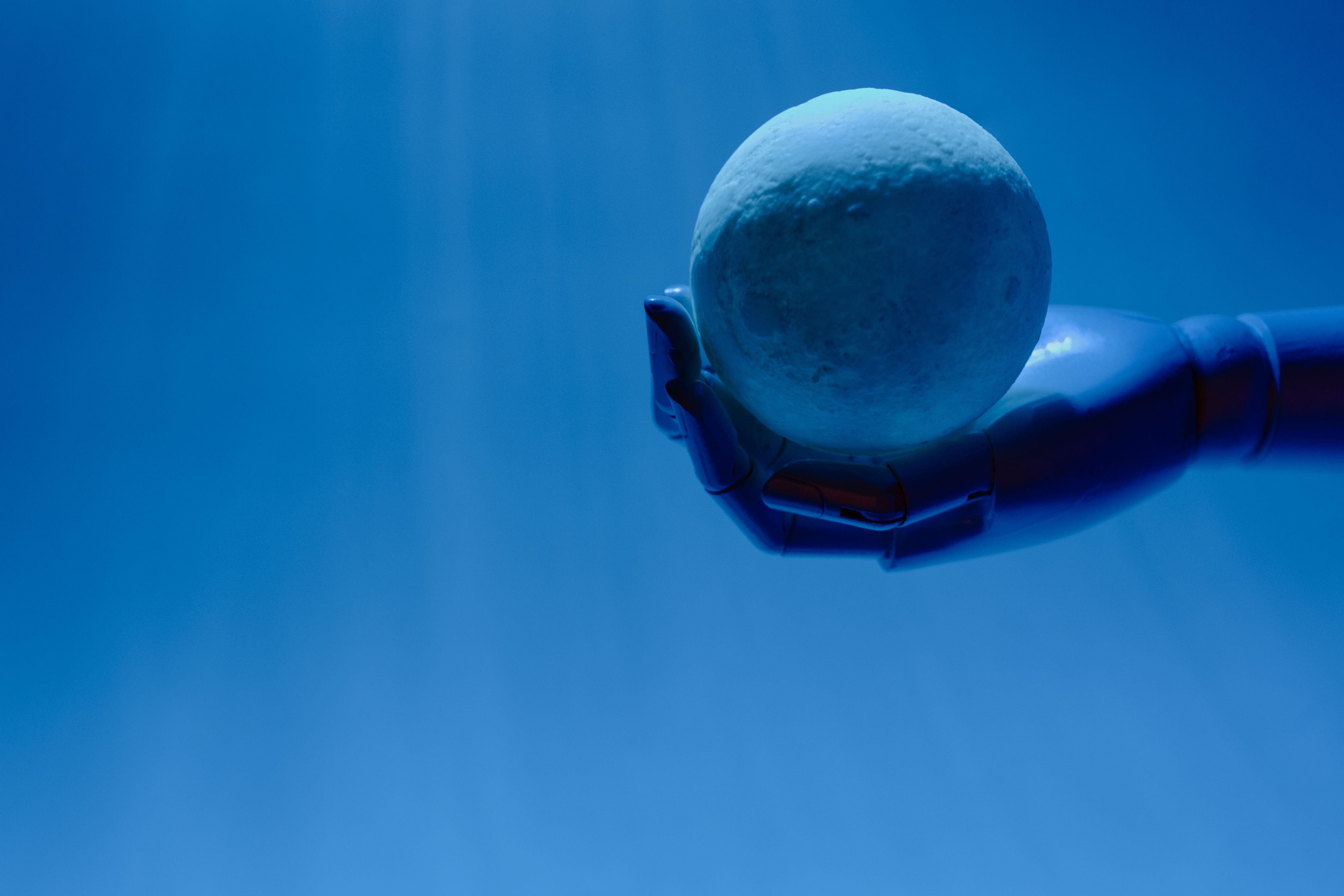
Close your eyes and pick up a glass.
You can tell whether it is slipping, roughly how hard you are squeezing it, whether its surface is smooth and how its position is changing inside your hand.
A robot relying mainly on cameras loses much of that information the moment its fingers wrap around the object.
For machines expected to operate in messy human environments, vision is astonishingly useful.
It is also not enough.
Cameras cannot see through fingers
Modern robotics has benefited enormously from advances in computer vision. Cameras can identify objects, estimate their position and help a robot plan how to grasp them.
Then the robot actually grasps the object.
Its own hand may now obscure precisely the area it needs to understand.
Humans solve this problem almost unconsciously using touch. Our skin detects pressure, vibration, texture, temperature and tiny changes that indicate an object is beginning to slip.
Roboticists are trying to build an engineered equivalent: tactile sensing.
Research from MIT's GelSight group has demonstrated sensors capable of providing detailed information about contact geometry, force, slip and object properties. Some designs essentially place a tiny camera inside a robotic finger and observe how a deformable sensing surface changes when it touches something.
A camera, ironically, ends up helping a robot feel.
Why touch changes manipulation
Imagine asking a robot to insert a key.
Vision can guide the hand close to the lock. But the final millimetres may depend on contact.
Is the key touching the edge? Is it aligned? Has it started entering? Should the robot push harder or rotate slightly?
The same problem appears when folding fabric, handling fruit, plugging in a cable or lifting a glass without crushing it.
MIT researchers have shown tactile systems that can infer properties such as object orientation, contact geometry and hardness.
That information allows the robot to close the control loop.
Instead of “move fingers to coordinates X and Y,” the behaviour becomes closer to: “grip until secure, detect whether the object moves, and continuously adjust.”
That is a much more useful relationship with reality.
Reality is notoriously reluctant to remain at coordinates X and Y.
AI makes the sensor more valuable
The arrival of large robotics models makes tactile information particularly interesting.
Modern vision-language-action systems are increasingly capable of interpreting scenes, understanding natural-language instructions and generating robotic actions. Google DeepMind's current Gemini Robotics family, for example, is explicitly designed to connect multimodal reasoning with physical control.
But an intelligent controller can only reason over information it receives.
A robot with excellent AI and poor sensing is rather like an excellent driver wearing fogged glasses and oven mitts.
Researchers are consequently working on tactile sensors that are thinner, more flexible and easier to integrate into robotic hands. MIT's 2025 Microsystems Annual Research Report describes work on thin tactile sensing intended to reduce the bulk and rigidity associated with many optical tactile sensors.
The hard part is not merely adding sensors
Robot skin creates its own engineering problems.
Sensors must survive repeated contact. They need to cover useful portions of the hand without making fingers enormous. Data must be processed quickly enough for the robot to react before the wine glass has completed its educational journey toward the floor.
And training data is difficult.
Internet-scale AI benefited from billions of images and pages of text already sitting online. There is no equivalent internet containing trillions of neatly labelled examples of how a robotic fingertip felt while grasping a slightly damp coffee mug.
Robotics companies increasingly collect physical interaction data precisely because embodiment cannot be downloaded as easily as text.
That may become one of the industry's biggest bottlenecks.
Giving robots better reasoning made them much more capable.
Giving them a useful sense of touch may be what finally makes those capabilities dependable after their hands meet the world.