A robot may easily find a cup on a clean table. But what happens if the same cup is behind a bowl or the room is dark? The robot might not notice it. A Paris-based start-up called Physicl has introduced a new tool called Physicl Studio to help solve this problem. It allows developers to create virtual scenes and train robots without setting up real rooms every time.
Physicl Raises $10 Million and Launches Studio
On November 6, 2026, Physicl announced that it had raised $10 million in funding led by Inovia Capital. The company also introduced its first application, Studio.
According to Physicl, Studio has around 10,000 virtual environments and more than 100,000 objects. However, these numbers have not been independently verified.
For now, access is limited, but interested teams can sign up through the company's website.
How Does Physicl Studio Work?
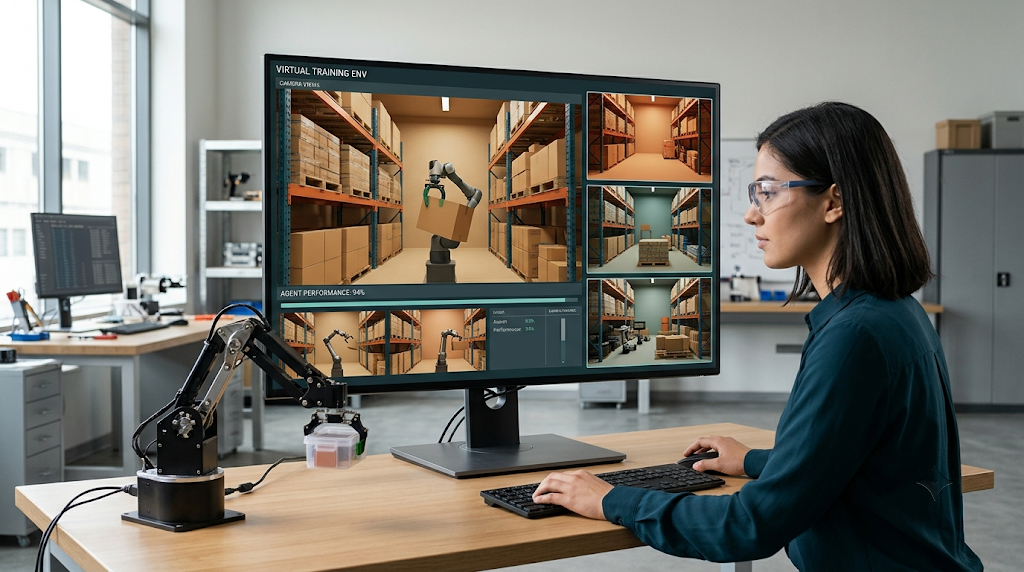
Physicl Studio works like a virtual room inside a computer.
Developers can create different scenes and change things like lighting, camera angles and object positions.
For example, they can place a cup on a table, move it behind another object or make the room darker.
Studio then creates images and videos of these situations. It also provides information about object shapes, distances and camera positions.
This saves developers time because they do not need to label every image manually.
Why Is This Important for Robots?
Robots need practice to recognize objects in different situations.
A robot might recognize a cup in bright light but fail to find it in a dark room. Developers can use Studio to create more examples of the situations where the robot struggles.
This idea is not completely new. In 2017, researcher Josh Tobin and his team showed that robots could learn to recognize objects using computer-generated images.
However, virtual images do not always look exactly like real-world scenes.
Studio focuses on helping developers find specific problems and create training examples to address them.
What Are the Limitations?
Physicl Studio creates training data, but it does not directly control robots.
Physicl says a company called SpAItial reduced its room-reconstruction error by more than half after using its data.
However, this result comes from Physicl's own announcement. It has not been independently confirmed, and it does not prove that robots perform better.
Other companies, including NVIDIA, also offer simulation tools. So Physicl must show why its platform is useful and worth the cost.
What Happens Next?
Physicl plans to use its new funding to hire more people and improve Studio.
The company also needs to show that its training data helps robots work better in real situations.
Virtual training can save time, but robots still need real-world testing.
Physicl Studio offers an interesting way to help developers understand where robots make mistakes. Its success will depend on whether those improvements work outside computer simulations.