What Is Happening?
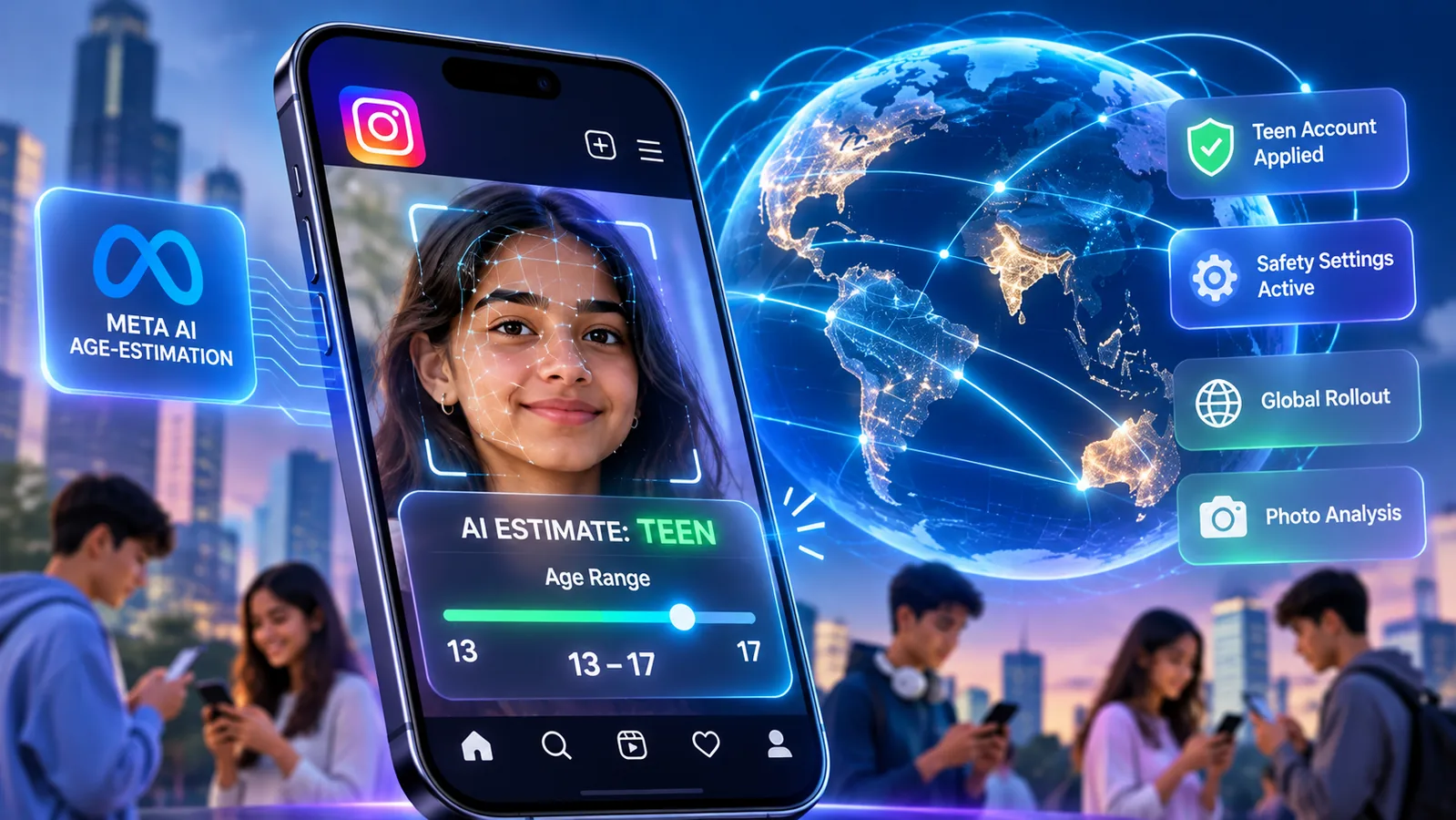
Meta is now using artificial intelligence around the world to guess how old Instagram users are. This expands a test Meta started in April 2025. Instead of trusting the birthdate a user types in, Meta’s system lets AI figure out if someone is actually a teenager.
If the AI thinks a user is between 13 and 17 years old—even if they signed up using an adult birthdate—it moves their profile into a restricted "Teen Account".
Main details of the rollout:
-
Global Expansion: Active on Instagram worldwide, with Facebook expanding it now and Threads adding it later in 2026.
-
Phone Signals: In Australia, Meta uses age-range information shared by Apple's App Store to double-check ages.
-
Industry Push: Meta is asking competitors like TikTok and YouTube to use similar age-guessing tech so all platforms follow the same rules.
How Does It Work?
Instead of relying on honest signups, Meta’s software looks at clues across an account to make a guess.
The system reads profile bios, captions, birthday posts, and comments. It also looks at who follows the account and checks patterns in uploaded photos and videos. Meta states that its visual checks look for general age clues—like school gear or birthday posts—rather than using facial recognition to match identities.
Checking billions of posts takes heavy computer power. Meta runs these checks on its own servers to catch underage users without forcing everyone to upload an ID right away.
Why Is It Important?
This is one of the biggest uses of AI to enforce safety rules online. Meta is making AI age-guessing its main front door for keeping kids safe.
This shift changes how platforms protect younger users worldwide. In countries like India, where the Digital Personal Data Protection (DPDP) Act bans targeted ads for minors and requires parent consent, using AI to catch teenagers helps Meta follow local laws automatically.
Connecting this AI to Instagram's main engine is tough work. Engineers must make sure that once the AI flags someone as a teen, the app immediately locks their direct messages and hides ads.
What Are the Challenges?
Even with better safety, privacy and accuracy are big concerns. Meta says more than 90% of teens placed into these accounts stay in them, but it has not shared independent test scores showing how often the AI makes mistakes.
If the AI falsely flags an adult as a teenager, that adult gets stuck with strict messaging limits and screen-time reminders. Fixing the mistake is not easy—users cannot simply edit their birthdate in their settings.
What Happens Next?
Meta is starting to send in-app messages to parents in the United States to explain how the AI age checks work.