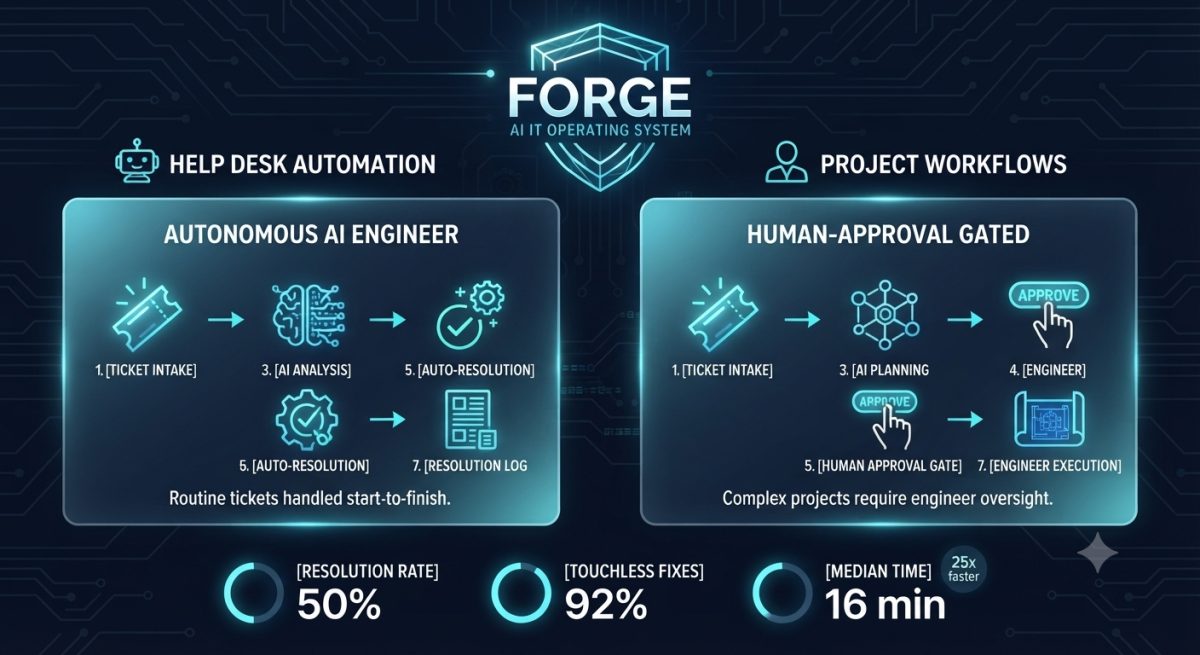
IT support teams waste a ton of hours on boring stuff like password resets, access requests, and basic setup tickets. On September 28, 2026, Shield Technology Partners introduced Forge, which it calls an AI operating system for IT services. According to Shield’s Business Wire announcement and coverage from TechIntelPro, the system is already running and resolves half of all the helpdesk tickets it can act on. Even crazier, Shield says 92% of those automatic fixes needed no human approval and no technician time at all.
A lot of AI announcements are just about what a company plans to build someday. This one is different because Shield backs it up with numbers from a system that’s actually live.
How Forge handles IT work
Shield says Forge splits routine requests from harder engineering work using two modes.
Autonomous AI Engineer for helpdesk tickets. The AI Engineer takes care of eligible tickets from start to finish. It does the intake, figures out the problem, and fixes it by itself. If a ticket needs human judgment, has confusing troubleshooting, or involves touchy permission changes, it passes the job to a real technician.
Approval-gated project workflows. For bigger infrastructure jobs and multi-step IT projects, Forge doesn’t go fully autonomous. Humans have to approve things first, so engineers can look over and sign off on changes before they happen.
Speed and impact
I think these numbers show how focusing automation on the right things can change how a helpdesk works. Shield says tickets solved by Forge close 25 times faster than ones solved by technicians, with a median resolution time of 16 minutes. If the easy, repeating tickets get cleared that fast, senior engineers can spend their time on the real root causes of problems instead of sorting tickets all day.
Things to be careful about
Strong numbers on standard requests sound great, but there are three things IT leaders should think about before trying something similar.
The numbers are self-reported. The 50% resolution rate, 92% touchless rate, and 16-minute median all come from Shield itself, not from an outside audit. Results at other companies could be pretty different depending on how standardized their tickets are, how identity systems are connected, and how good their internal documentation is.
Handoffs need careful setup. Automating half the queue means you need clear lines for when the AI passes things on. If it’s too cautious, technicians still get interrupted all the time and get tired of reviewing. If it’s too loose, the AI could mess up someone’s access or device settings.
Logs and rollbacks matter. Even if tickets close without approval, security teams need full records of every automated change. There also needs to be an easy way to undo things whenever an agent changes user permissions or network settings.
What this means going forward
By combining hands-off ticket fixing with human approvals for bigger projects, Shield shows a practical way to automate IT service. Support teams are dealing with more tickets and tighter deadlines, so real, live speed will probably matter more than future promises when it comes to trusting AI agents.


