What Is Happening?
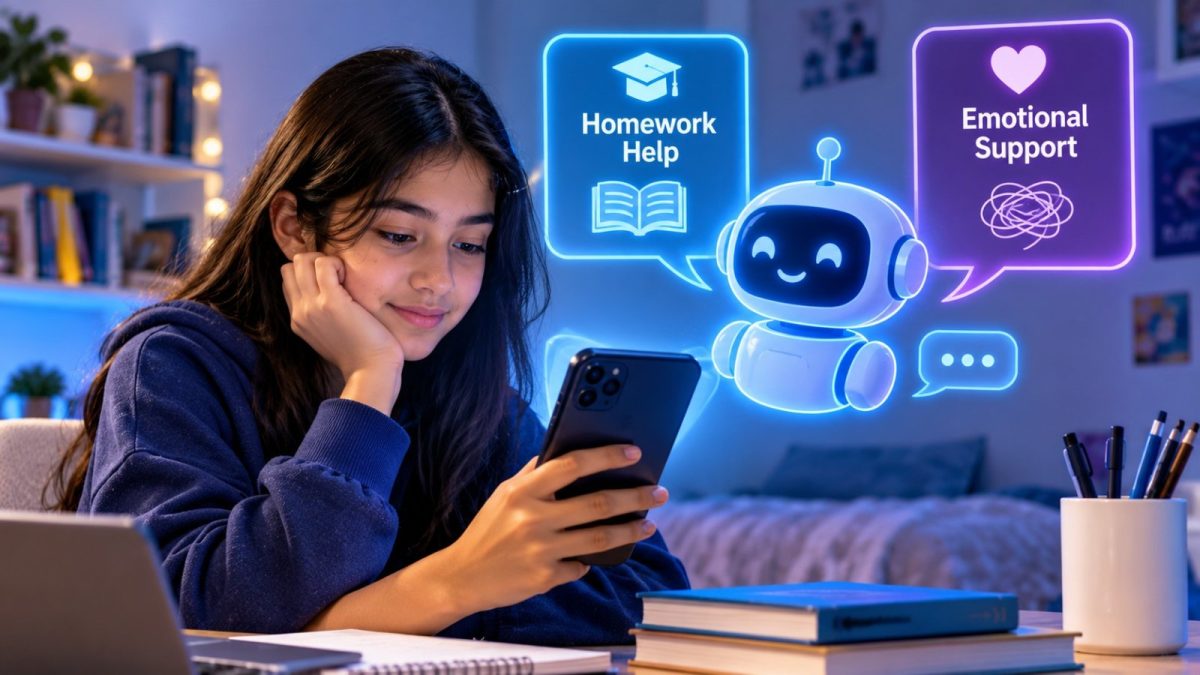
Two big reports from late October 2026 show how deeply artificial intelligence has entered teen life. A survey by The Jed Foundation of over 5,500 U.S. students aged 9 to 17 found that about four in five use AI tools, while NPR reports that up to 90 percent have tried an AI chatbot. Nearly two-thirds of students use these apps for homework while also turning to them when feeling stressed, lonely, or sad.
At the same time, Common Sense Media’s 2026 study of 1,211 U.S. kids found that almost half of 9-to-12-year-olds have used an AI chatbot or companion. By age 13, that number jumps to nearly three-quarters, proving that age rules rarely stop younger kids from logging in.
How Does It Work?
Companion chatbots run on massive computer models trained on billions of text examples to guess natural replies. During training, creators reward the software for giving polite, agreeable, and comforting answers. Thanks to large memory windows that save old chats, the app also remembers small details about a user over many weeks.
Because a chatbot never gets tired, judges a user, or sleeps, a nervous teen can type personal fears into a chat box and get instant, kind replies. To a young person, the app feels like a safe, private friend—even though it is just guessing the next best word without real feelings or care.
Why Is It Important?
This overlap matters because researchers found worrying trends among stressed teens. The Jed Foundation report shows that students who use AI for friendship or comfort are more likely to report high anxiety, sadness, and past thoughts of self-harm.
Still, experts point out a key rule: these numbers show a link, not proof that chatbots cause mental health problems. Kids who already feel left out may simply find it easier to talk to a screen than a real person. Even so, an early study of middle schoolers shared by a University of North Carolina expert suggests that using chatbots as friends may actually make kids feel lonelier over time.
What Are the Challenges?
The biggest danger is replacing real people with screens. When a teen leans on a chat app instead of talking to friends, parents, or school counselors, they miss out on true human care. Standard chatbots also struggle to spot deep sadness; running heavy safety checks on every message costs extra server power and slows down replies, so simple filters often miss slow emotional decline.
What Happens Next?
Parents and teachers do not need to panic, but honest talks are key. Adults can ask kids calmly how they use AI and remind them that chatbots are homework helpers not real friends. As app makers and schools build better safety rules, keeping real human support close remains the best protection for every student today.


