How AI Is Helping Scientists Understand Animal Sounds
A dog might bark when it wants attention, while birds use calls to warn others or find a mate. Animals share information in lots of ways, but people only understand a small part of it. Researchers are now using AI to study animal sounds and behavior. The goal isn’t to turn every call into human words. It’s to find patterns that might explain what animals are saying to each other.
What is AI learning from animal sounds?
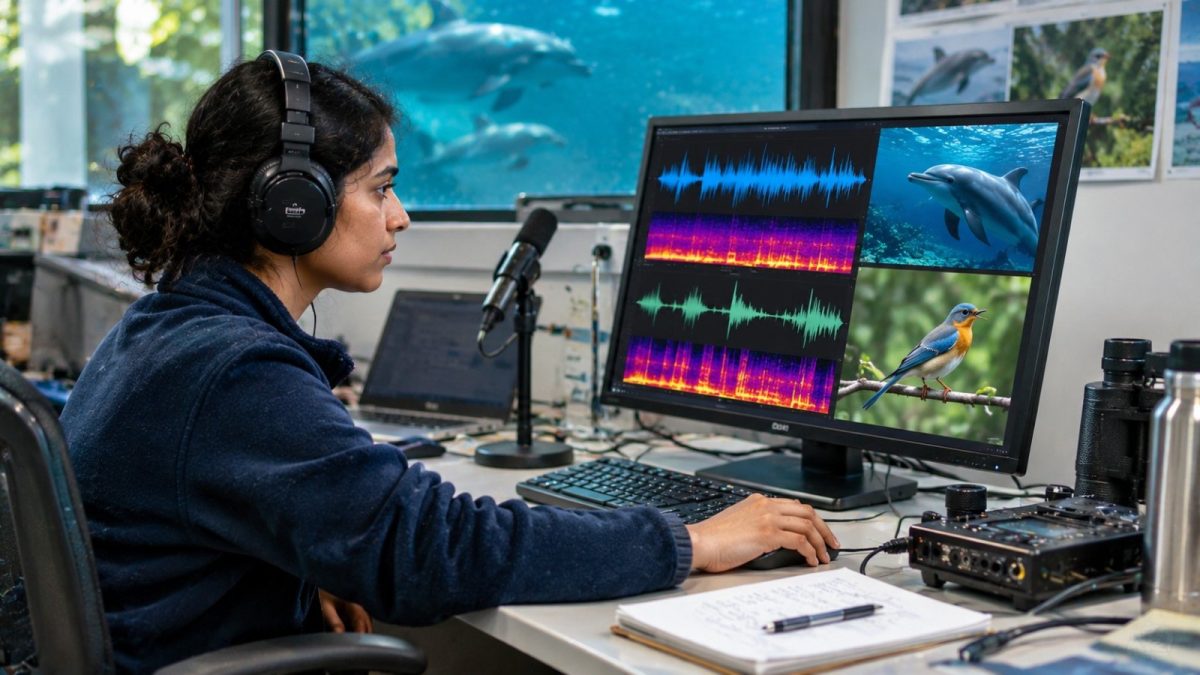
One project is DolphinGemma, which Google announced in April 2025. It was made with the Wild Dolphin Project and Georgia Tech, and it studies the clicks, whistles and other sounds dolphins make. It looks for patterns that repeat and can guess what sound might come next. This could help researchers learn more about how dolphins interact.
The Earth Species Project is building AI tools to study sounds from many different animals. Its NatureLM-audio model was made to analyze animal sounds. In 2026, the group introduced alp-data, a tool that brings together more than 35 sound datasets so researchers can use them more easily.
How does the technology work?
Researchers collect recordings using underwater microphones, field recorders or small devices that animals carry. They also write down what the animals are doing. For example, they might record a dolphin making a sound while swimming next to another dolphin.
Then AI software studies the recordings. It can sort sounds into groups, find patterns that repeat, and compare calls with things happening in the animals’ lives. It’s a bit like sorting thousands of messages by topic. A computer can find patterns much faster than a person who has to listen to every recording.
But finding a pattern isn’t the same as knowing what it means. Scientists still have to check whether a sound is linked to a certain action or reaction.
Why could this research matter?
Understanding how animals communicate could help scientists learn how they form groups, take care of their babies, find food and warn each other about danger. It could also make wildlife monitoring better. AI can scan huge amounts of audio and help researchers notice changes in how animals behave.
Google Research reported in February 2026 that its Perch 2.0 model, which was trained mostly on bird and other land-animal sounds, could also help with some whale sound tasks. This suggests that tools trained on one group of animals might be useful for studying another.
What are the biggest challenges?
Animals don’t talk in neat sentences like humans. A call can mean different things depending on the animal, where it is and what’s going on nearby. Wind, rain, engines and other animals can also make recordings hard to understand.
People might also give a sound a meaning that the evidence doesn’t back up. AI can make mistakes too, especially with animals or sounds that weren’t in its training data. Researchers need careful observations and repeated tests before they make any claims.
What happens next?
Researchers are collecting more recordings and sharing datasets so different teams can test their tools. Projects like Project CETI are combining sound recordings, video and animal behavior to study how sperm whales communicate.
AI is helping scientists ask better questions about animal sounds. It hasn’t given humans a reliable way to talk with animals yet. For now, the most important step is to listen carefully and understand what the evidence really shows.